

September 2023: the calm before the conference storm!
Spring may have sprung, but we’ve had no time to stop and smell the roses as we crank into gear for the conference season to end all conference seasons in October!
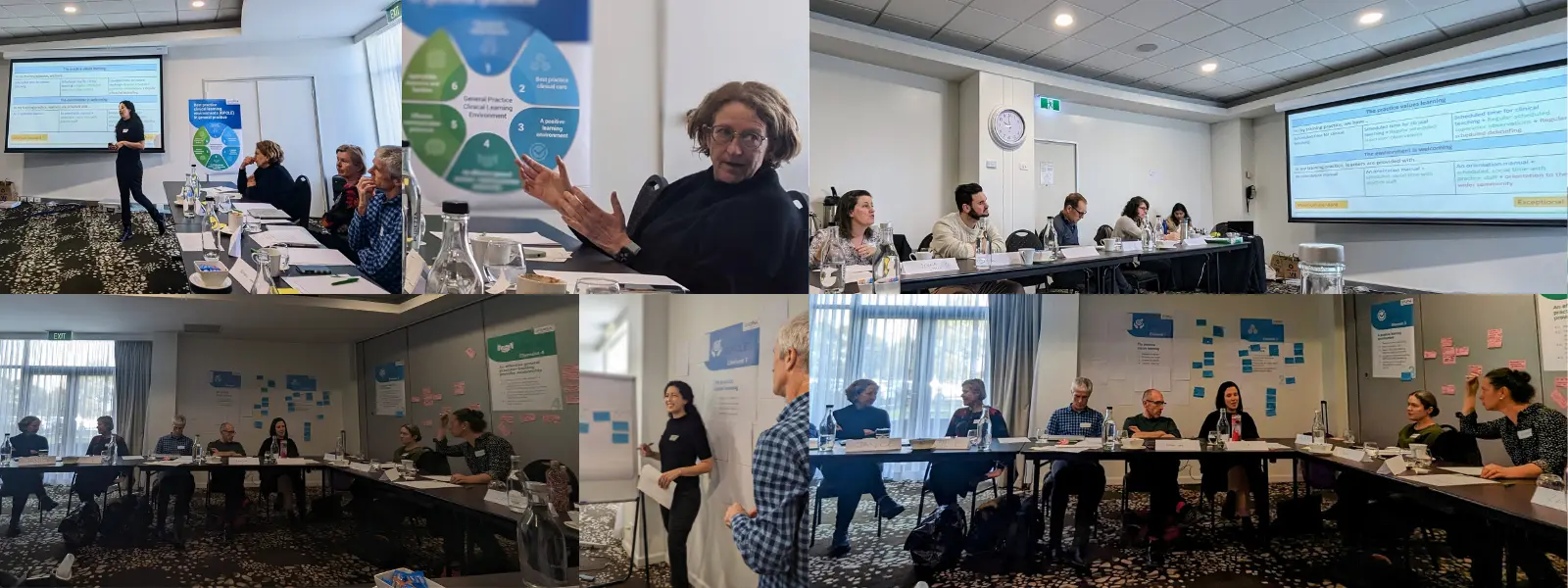
September wasn’t exactly a quiet one though, don’t get me wrong! While I madly worked well into each night on the final touches for our first ever mobile app “Scenario”, scheduled for release in time for the RMA conference next month, the amazing Dr Samia Toukhsati and her team of researchers pulled together a hugely successful in-person workshop for the development of our quality improvement tool as part of the RACGP ERG-funded General Practice Clinical Learning Environment (GPCLE) project. Bringing the who’s who of GP training into the one room (well, ultimately two rooms as there were so many of us!), this workshop produced the basis for what I know will be an absolute game-changer for GP supervision into the future.
Shortly after this workshop, Kevin and I converged on Brisbane for the final GP Training Advisory Committee meeting of the year, where we had a second opportunity to present to the sector on our vision for a unified pathway for supervisors as well as students/trainees. GPSA has been working closely with the Medical Deans and opening channels in the prevocational space to do what we can to minimise the duplication of effort and accreditation requirements for the overlooked and under-remunerated supervisors responsible for perpetuating interest in general practice across the educational continuum. The difficulty with this has always been the lack of cohesion between educational institutions from university to College.
GPSA Discussion Paper – Introduction of universal training practice standards for supervision of medical students, prevocational learners and IMGs
Background
● In October 2022, GPSA broadened its Constitution to include supervisors of all participants across the GP / RG pathway (rather than just supervisors of registrars on vocational programs).
● The quality of placement experiences for medical students / PGY1s / PGY2s / IMGs is widely varied, with no overarching standards for supervision other than basic practice accreditation in most instances: leading to attrition before conversion of these future GPs / RGs into registrars on a vocational program.
● The lack of overarching standards for practices and supervisors across the educational journey means that placements coordinated independently by universities, Rural Workforce Agencies, Rural Generalist Pathway organisations etc are not formally recognised in number or quality by the Colleges in their training practice accreditation processes.
● The one constant across the medical student’s journey to fellowship is the training practice, where high quality, structured placements are recognised as aiding in the attraction and retention of doctors in training to this medical specialty.
Overview
● In the current climate, the majority of practices keen to start supervising registrars are being turned away and not being given an option to become accredited for training at any stage of the future GP’s journey.
● As the representative body for training practices engaged with medical students through to vocational registrars, GPSA is a natural conduit capable of driving collaboration between educational and workforce organisations and the Colleges.
● GPSA is well placed to develop and promote standards that feed into the Colleges’ accreditation of training practices such that recognition is given for the quality of placements provided to medical students, prevocational learners, IMGs and doctors under remediation.
● A tiered approach to accreditation – say Level 1 for Medical Students, Level 2 for Prevocational Learners / IMGs, Level 3 (Fully Accredited Training Practice) for Vocational Registrars – would encourage more practices to develop and maintain high value learning cultures even when they do not qualify for registrars at a single point in time: knowing that their work with medical students etc would be recognised later in the educational journey.
● Practices and supervisors would be better equipped and more motivated to guide participants on the GP / RG pathway to continue on this journey if there was formal recognition of medical student / prevocational learner supervision under an accepted set of standards leading into College accreditation as a training practice / supervisor for vocational registrars.
Strategy
● Adaptation of current GPSA resources (teaching supervisors the “how to” teach in the clinical learning environment) to have broader application for medical students and prevocational learners is already underway, along with the development of “plug-and-play” teaching plan-style supports to help practices offer high quality, engaging supervised placements, tailored to each level of education and to specific interests.
● By creating a pathway for training practices that echoes the pathway of the student, the goal would be to reduce the placement focus on workforce and increase the focus on quality outcomes through long-term relationships between the trainee, the practice team, and the general practice specialty.
Talking Points
● GPSA seeks to obtain advice and support from the sector to progress this project.
● GPSA seeks a commitment from RACGP and ACRRM to collaborate on the development of standards for prevocational / medical student / remedial registrar supervision to ensure these standards can be recognised and align with the vocational accreditation requirements for training practices.
● GPSA would be best placed to lead this project as the representative body for training practices and a sector conduit, bringing together the various stakeholders and supporting practices through the requisite changes to ensure they are aware of and able to meet the target standards.
● GPSA would form a Steering Group to oversee the development of and monitor the standards and their ongoing application as the training environment evolves with, by way of example, the greater focus on Rural Health Multidisciplinary Training (RHMT); Steering Group representation would ideally be sought from the College of Medical Deans, Regional Training Hubs, Rural Generalist Pathway agencies, PHNs, AMSA, GPSN, IGPRN, GPRA, and the AMC.
Sensitivities
● If the Departments of General Practice should achieve their goal of making a general practice rotation mandatory for doctors in training through PGY1 / PGY2, this could potentially create more harm than good: unless standards are imposed on the practices offering supervised placements.
● Current training practice accreditation processes are onerous for both the College and the practice, making it necessary for standards introduced under this project to avoid duplication of easily sourced data, include user-friendly language and systems, and be readily monitored and evaluated.
● While this project is scoped for the training of future GPs, it would be short-sighted to develop these training practice standards to only cater to GP training in the private community setting when there would be similar need for universal placement standards in AMSs, ACCHOs, and state-run clinics where nursing, dental and allied health students / trainees would also be supervised under the RHMT program.
Our presentation of this paper was received with quiet enthusiasm by the sector stakeholders, and much less muted enthusiasm by the Commonwealth. While we can only wait and see how the Colleges respond to this new challenge to their dominance over the GP training sandpit, Kev and I at least had the opportunity to catch up with some College representatives and GPSA members at a very fun member networking night while in Brisvegas.